What Is The Difference Between Regular And Sun Protection Swimwear?
there are 2 key differences between regular and sun protection coverup swimwear:
1. Fabric Type: regular and sun protection swimwear uses special type of stretch fabric that is suitable for use in water, mostly made from Nylon, Lycra, Elastane, Spandex or Polyester yarn. The quality and performance is linked to the fabric composition example Nylon/Lycra or Polyester/PBT and to the weight example 180gsm or 200gsm, however to achieve UV protection status the fabric need to be tightly knitted in order to block the sun UV rays from getting through and reaching the skin, hence some regular swimwear fabrics are not suitable for sun protection. The highest UV protection ratings a fabric can achieve is UPF50+ which blocks over 97.5% of the sun UV radiation according to Australian Radiation Protection and Nuclear Safety Agency (ARPANSA).
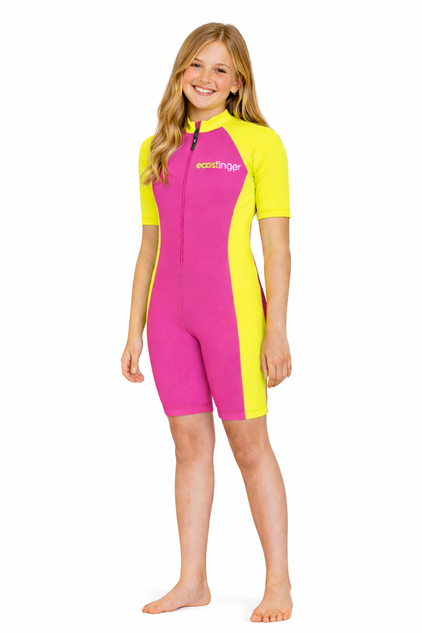
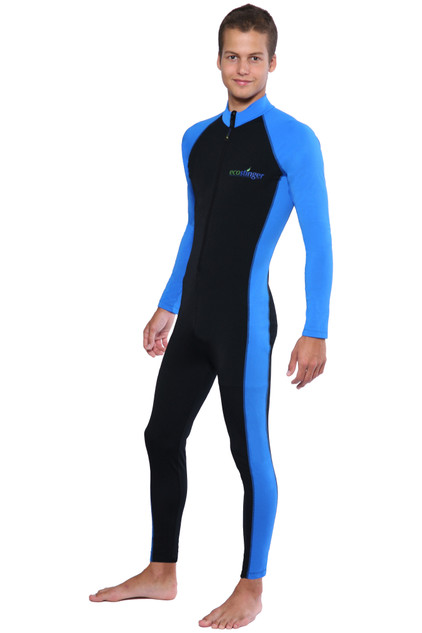
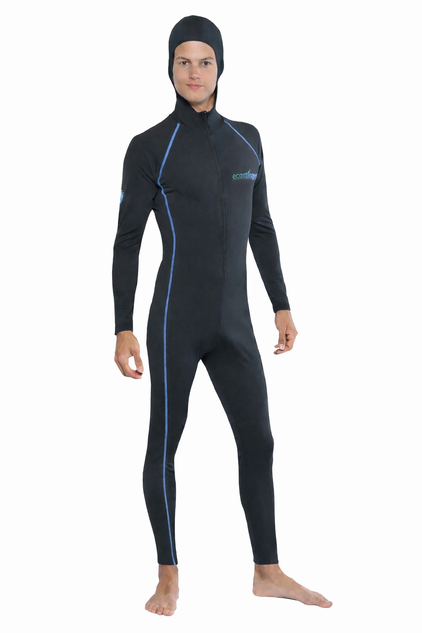
2. Design Style: the design difference is quite visible between regular swimwear which tends to follow fashionable trends and personal tastes where more skin is exposed, while sun protection swimwear take into consideration the need to cover as much skin as possible to ensure protection against the sun UV radiation; sun protective coverup swimwear designs such as stinger suits, dive skins and full body swimsuits covering the arms and legs have the ability to keep the skin protected all day long from the harsh UV rays which can cause sunburns, skin damage and worst case scenario skin cancer.
Over Exposure To The Sun UV Rays Can Severely Damage The Skin!
Millions of people head outdoors every year when the weather warms up, in fact the last statistical records by census.gov of 2023-2024 put the number of Americans aged six and older participation in outdoor and beach leisure activities over 175 million (Census Bureau of USA), this represent a big portion of the USA population, and this trend is set to grow in future years. In 2021, the latest year for which incidence data are available, 90,365 new cases of Melanomas of the skin were reported in the United States (Centers for Disease Control and Prevention). If you don't take precautions and steps to be protected from the sun UVA and UVB rays, you may end up with sunburns and unwanted skin damage.
Over exposure to the sun rays can severely damage the skin cells and may ultimately lead to skin cancer; protecting yourself and your family from an early age can help preserve your skin natural elements. Although sunscreen is a great tool to help prevent sun damage, but it is not enough on its own. When spending any amount of time in the sun, it is essential to wear UV protection swimsuit and sun protective clothing in addition to applying sunscreen to minimize the effects of the sun's ultraviolet rays.